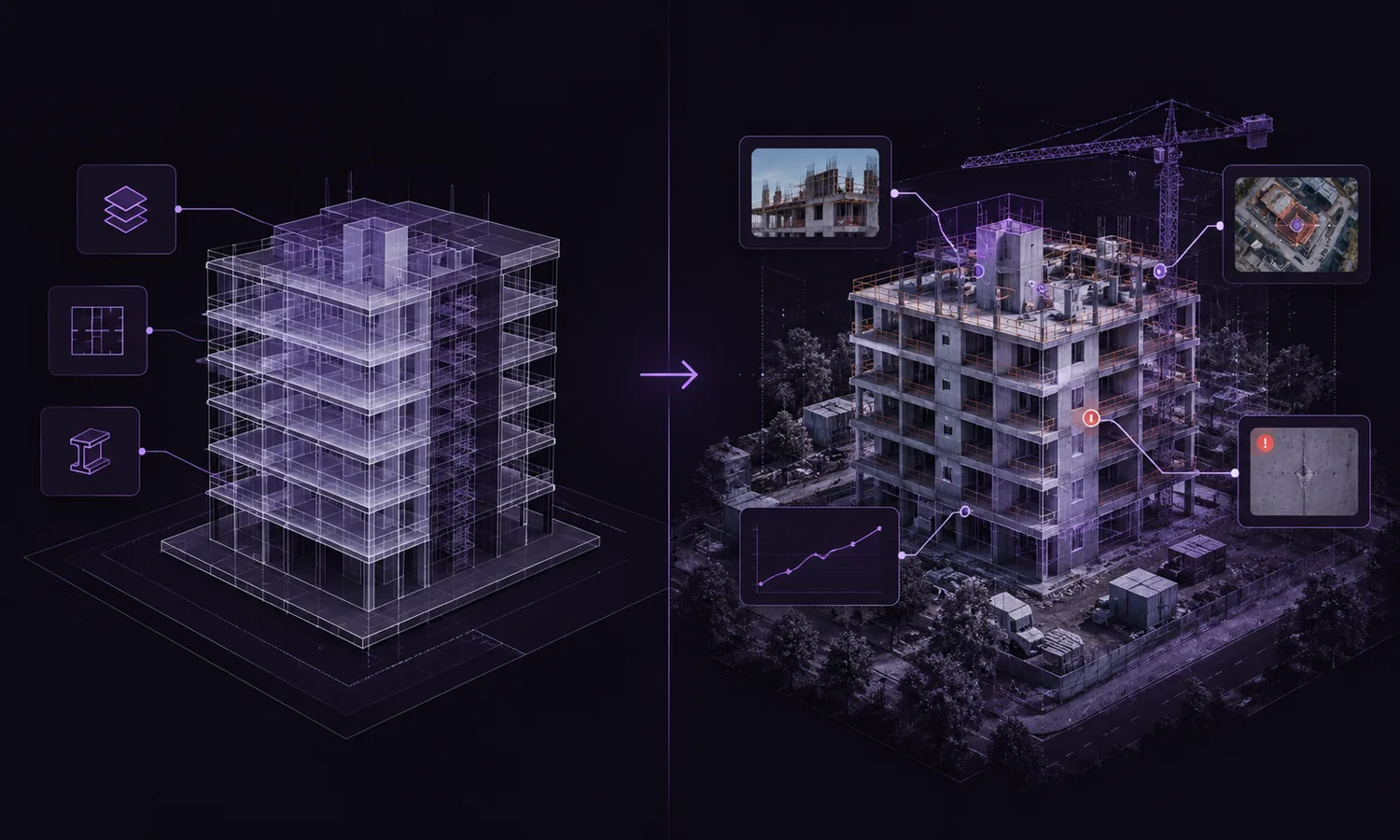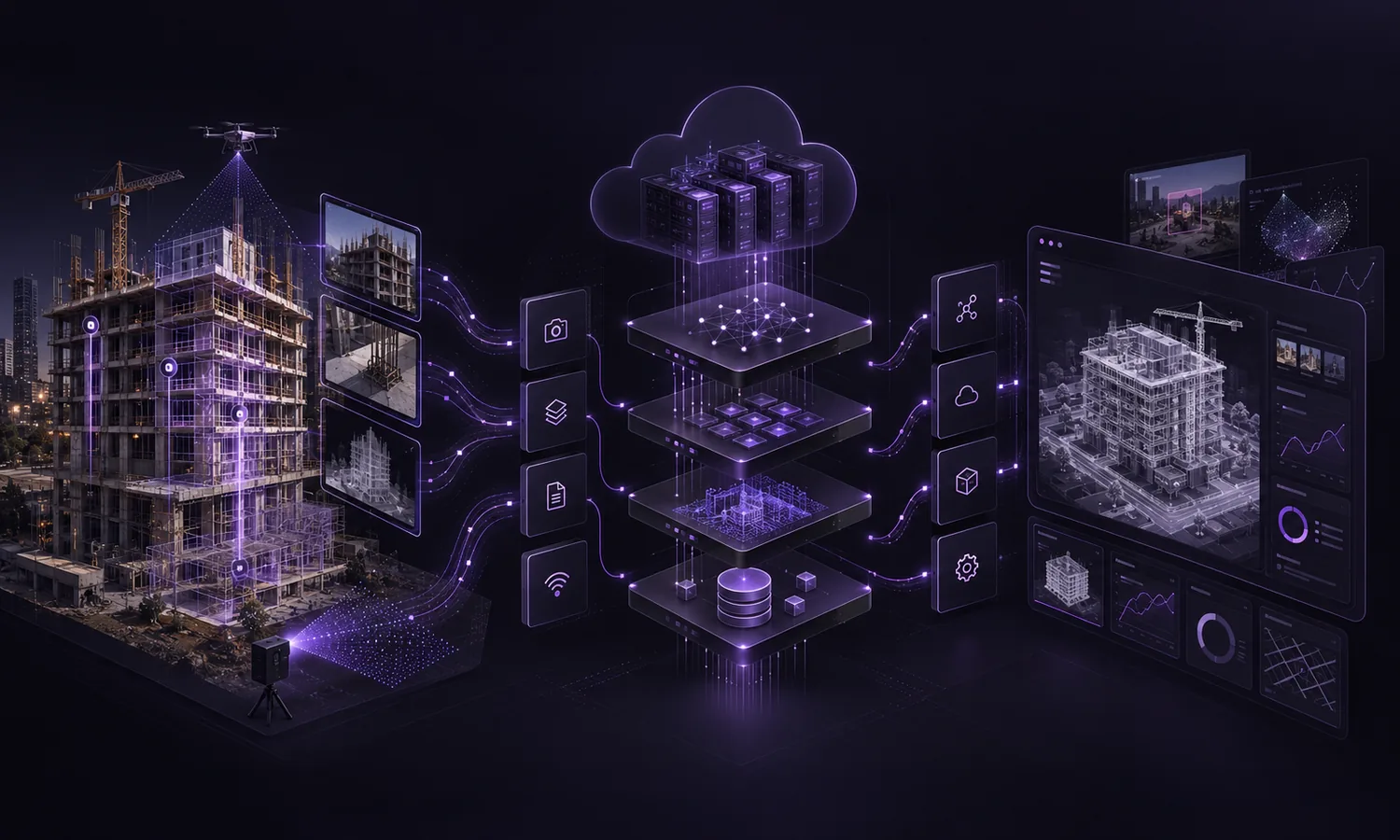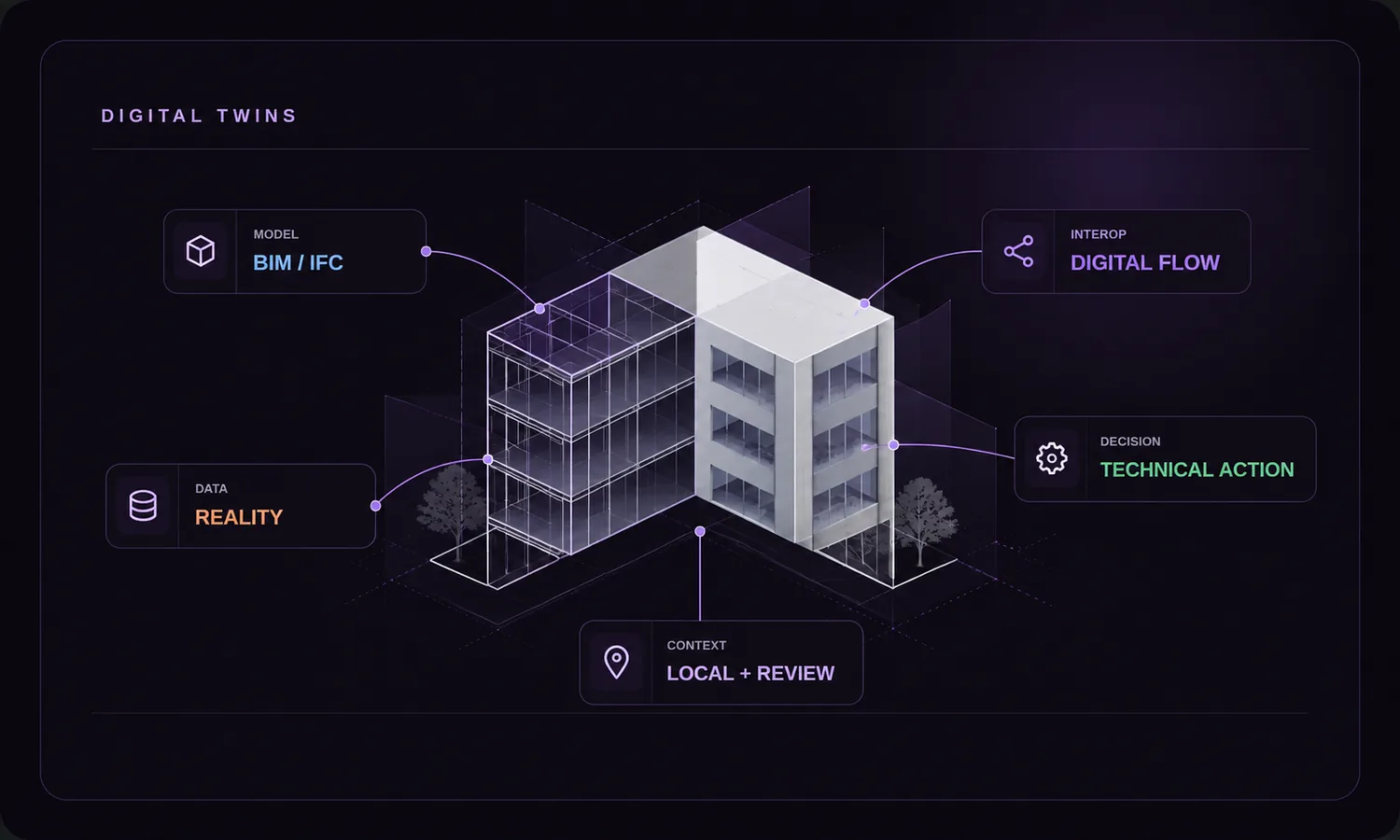
The difference is not the model's appearance, but the relationships it preserves. A team should be able to trace an observation to its evidence and understand the decision that followed.
Choose the right representation
BIM, textured meshes and point clouds describe different aspects of a project. BIM organizes components and properties; a capture records visible surfaces at a particular time. These representations are complementary, but they are not equivalent or necessarily equally accurate.
Keep provenance and location
Photos, models and observations need a location, a date and a revision reference. These records help distinguish recent information from outdated material and recover the evidence behind an analysis.
Exchange context, not just files
Opening different formats in one viewer is only the beginning. Units, coordinate systems, identifiers and relationships must remain consistent. Otherwise, teams still have to recreate those connections manually.
Use history to support decisions
Comparing visits requires understanding the coverage of each capture. Changes should be assessed against a consistent baseline, with uncertainty made visible and technical review retained.
From reference to application
Geminarium is being developed to connect models, captured reality, evidence and review. The goal is to reduce repeated context-building without confusing a convincing image with validated information.