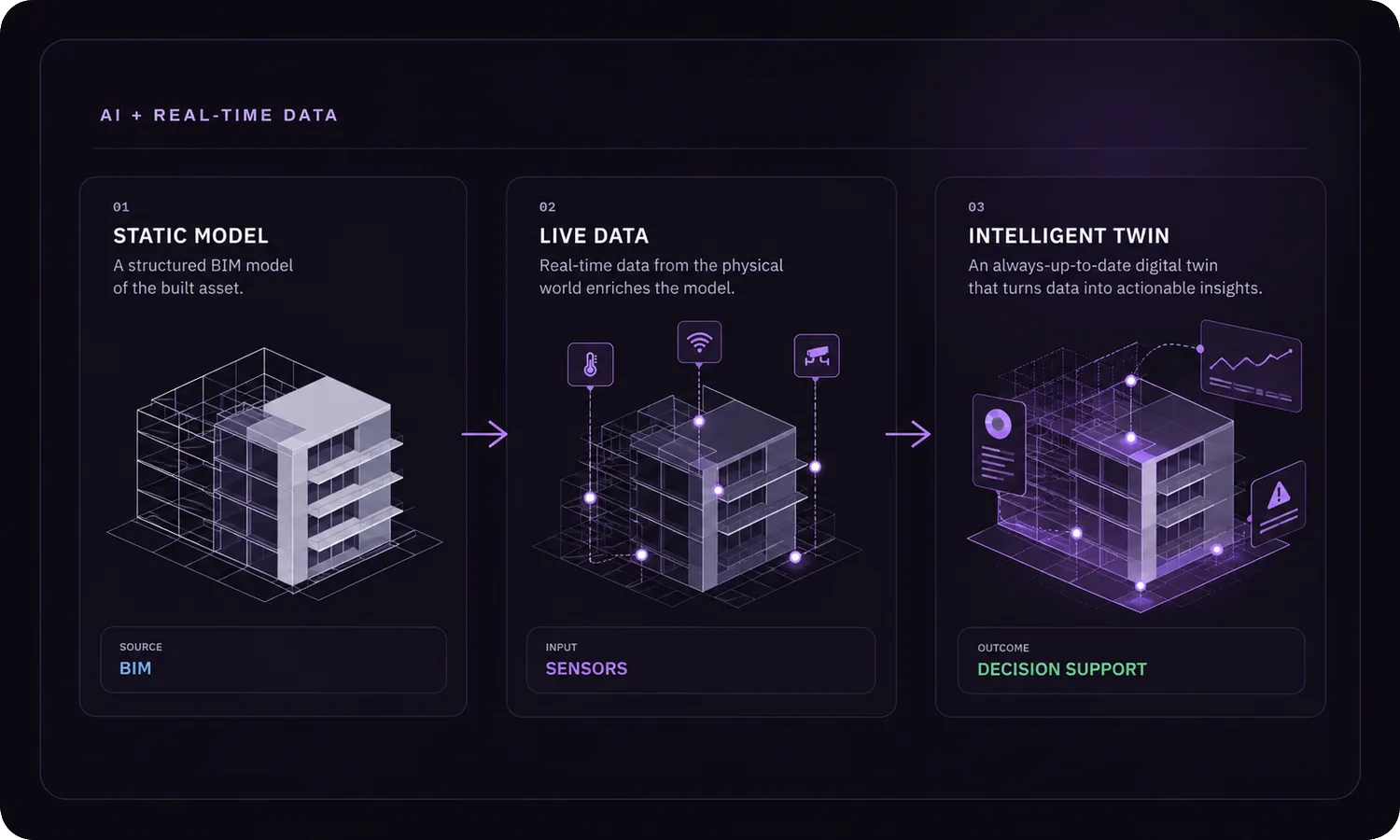
A clear foundation defines each stage's inputs, outputs and review process. This reduces exceptions and makes product development easier to manage.
Validate inputs
Format, units, spatial reference and provenance should be recorded before processing. Incomplete or inconsistent files should produce a clear status rather than apparently valid results.
Separate processing from interaction
Reconstruction and conversion take time. Job queues and explicit states allow progress reporting, failure tracking and retries without blocking navigation.
Preserve files and revisions
Every result should remain associated with its source data and processing configuration. Versioned storage and execution records make differences traceable and prevent silent replacement.
Make AI results reviewable
Detections and classifications should identify their origin, location and limitations. Confidence estimates can assist triage but do not replace quality criteria or engineering assessment.
Bring context together in the interface
Users should be able to locate evidence, identify its revision and take the appropriate next step. Showing more data does not improve decisions when its relationships remain unclear.
From reference to application
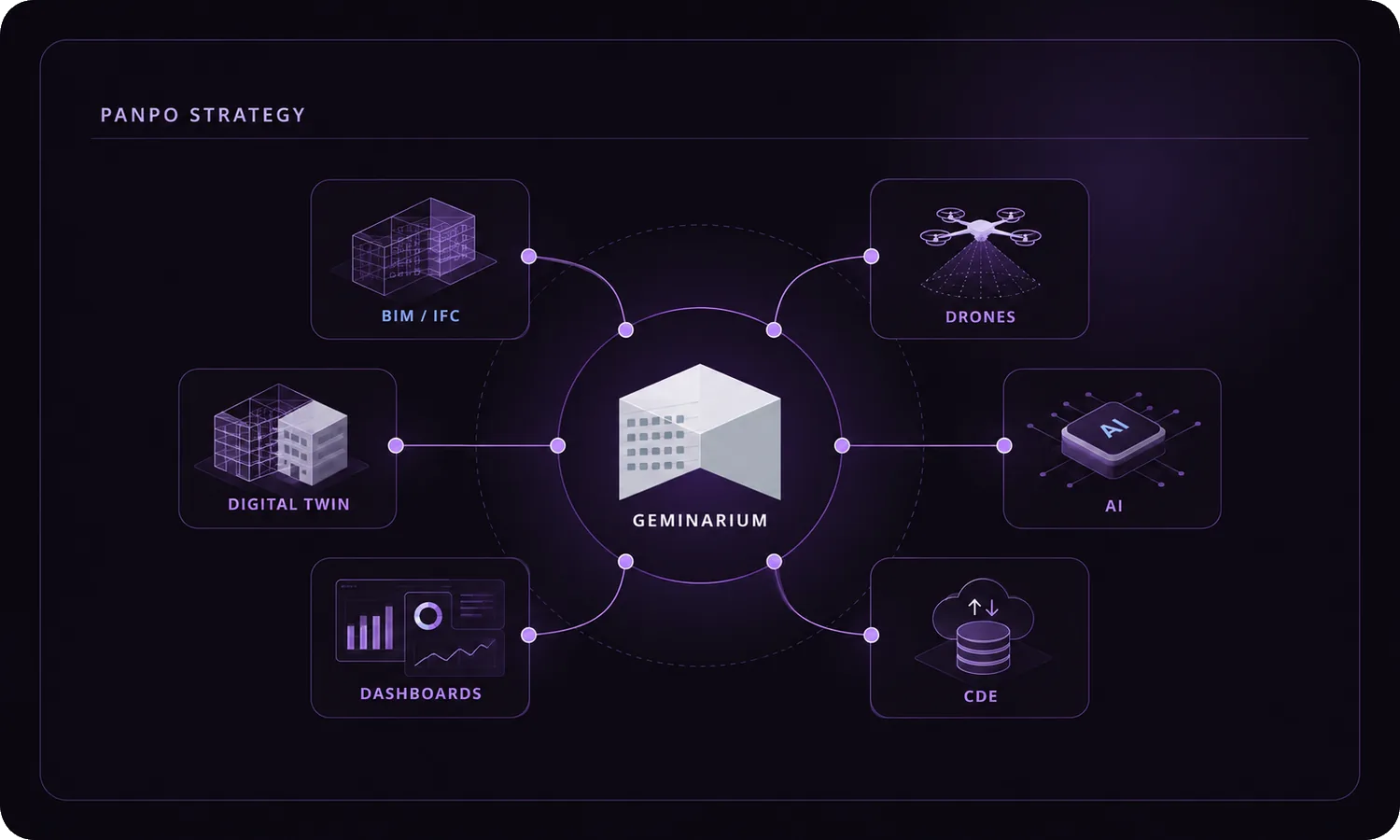
These principles guide Geminarium's development. Integration between processing, visualization and review must be demonstrated through complete workflows, not just isolated features.